


Handmade in Alsace
Wooden cutting board, handmade in Alsace
A wooden cutting board, when it is well made, lasts for years and keeps your knives sharp. Each board is made by hand, in end grain, from local wood species: every one is a unique piece.
- 10 to 20 years of life, with care
- 6 local wood species
- 1 copy of each board

Why wood
The material of the cutting board, since time immemorial
Wood has always been the material of the cutting board, and that is no accident. It cushions the impact of the blade and preserves the edge of your knives, where glass or stone dull them quickly. It is naturally healthy: its fibres trap bacteria and stop them from multiplying on the surface.
Above all, a wooden board can be repaired. Scratched, it can be sanded; dry, it takes a little oil; and it is good for years more. Well cared for, an end-grain board lasts ten to twenty years. It is also an object you enjoy putting on the table.
-
Knives stay sharp
Your knives hold their edge longer.
-
A healthy surface
A naturally healthy surface, easy to care for.
-
Repairable, not disposable
A durable, repairable object that takes on a patina instead of wearing out.

Wood or plastic
Wood or plastic: which board is healthier?
Plastic
Wood
PlasticOver time, blades cut grooves that are hard to clean, even in the dishwasher.
WoodIt does not let bacteria multiply in its scratches.
PlasticEvery cut releases microplastics.
WoodIt can be sanded when it gets marked.
PlasticA scratched board ends up in the bin.
WoodWell cared for, it lasts for years.
A handcrafted board costs more to buy, but how many plastic boards do you buy in ten years? Over time, wood wins, for your health as well as for the planet.
Long grain or end grain?
The two ways to make a wooden board
On a classic board, known as long grain, the fibres lie flat: the blade cuts through them, the surface gets marked, the edge of the knife dulls. On an end-grain board, the fibres stand upright, perpendicular to the surface. The blade slips between them, the wood closes up behind it, and the board stays smooth for much longer.
This is the technique of butcher's blocks and professional kitchens. All my boards are made this way: strips of several wood species, assembled, turned, then glued so that every square of the checkerboard shows the end of the wood.
The formats
Which cutting board for which use?
Each format serves a purpose. All are end grain, all are unique.
-
The plain board
The everyday format: vegetables, meat, bread. Around 40 cm long and nearly 4 cm thick, it stays steady on the worktop.
See the pieces -
The juice groove board
For the Sunday roast or meat that releases its juices: the groove catches everything, the table stays clean. With a catch tray on some models.
See the pieces -
The small board
Around 30 cm: for a small worktop, a quick cut, bread or cheese.
See the pieces -
The board with handle
For bread, cheese or serving: pick it up with one hand and set it down in the middle of the table.
See the pieces -
The tapas board
Long and narrow, it runs across the table for aperitifs and charcuterie.
See the pieces -
The palette and drop boards
Free-form shapes, for serving as much as for cutting: cheese, fruit, aperitifs.
See the pieces
All the available pieces are online, with their exact dimensions: choose the format, then the pattern you like.
The wood species
Which wood for a cutting board?
My wood comes from French forests: local species, assembled in end grain, with exclusively natural finishes, organic plant oils and beeswax.
-
Black walnut
The darkest of my woods: it draws the stripes and the dark squares of the checkerboard, and adds contrast.
-
Beech
Light, dense and even: the base of most of my boards. A kitchen wood par excellence.
-
Ash
Light as well, with a strong grain that shows in the end grain. Solid and lively.
-
Cherry
Pinkish to russet, it darkens over time: it gives the checkerboard its warm tones.
-
Maple
Very light and fine-grained: it brightens a board and makes the dark woods stand out.
-
Hornbeam
A hard, light wood that I use in touches in some small boards and drop boards.
For a cutting board, you want a hard, fine-grained wood that stands up to the blade and cleans well: these species are just that. By combining them, I play on their colours to draw the checkerboard, so that no two boards look alike.
Prices
How much does a wooden cutting board cost?
- approx. €60 board with handle
- approx. €80 small board
- approx. €145 plain board
- €155 to €185 juice groove board
Each product page shows the exact price of the piece.
A handcrafted end-grain board costs more than a mass-produced one, and that is to be expected: each piece is cut, assembled square by square, glued, sanded, dipped in an oil bath and then fed with balm, by hand, one by one. It also lasts much longer: ten to twenty years, compared with three to five years for a long-grain board.

The workshop
A handcrafted board in solid wood, made in France
Every board comes out of my workshop in Dambach-la-Ville, in Alsace. I choose the wood, cut it, assemble the strips, turn them to get the end grain, glue, sand. Before it leaves, the board is dipped in a plant oil bath, then, once dry, it receives my balm applied warm: organic plant oils and beeswax, nothing industrial.
I am a master craftsman, and renowned chefs work on my boards. No two boards are alike: the wood species, the pattern and the format change every time. Once a board is sold, it is gone.
Boards available today (32)

unique pieces in stock
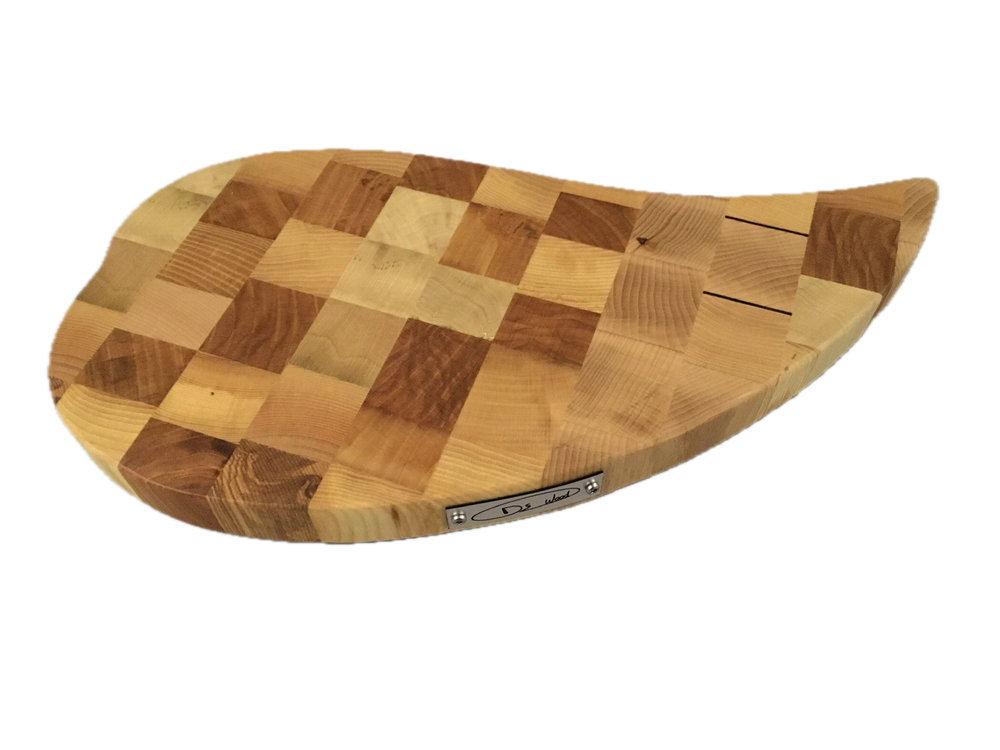

Drop Board 26-04 — End grain
Assembly of 5 local wood species with natural finishes. Size: 38 × 19 × 3 cm
One of a kind

Mini Drop Board 26-02 — End grain
Assembly of 5 local wood species with natural finishes. Size: 32.5 × 17.5 × 3 cm
One of a kind
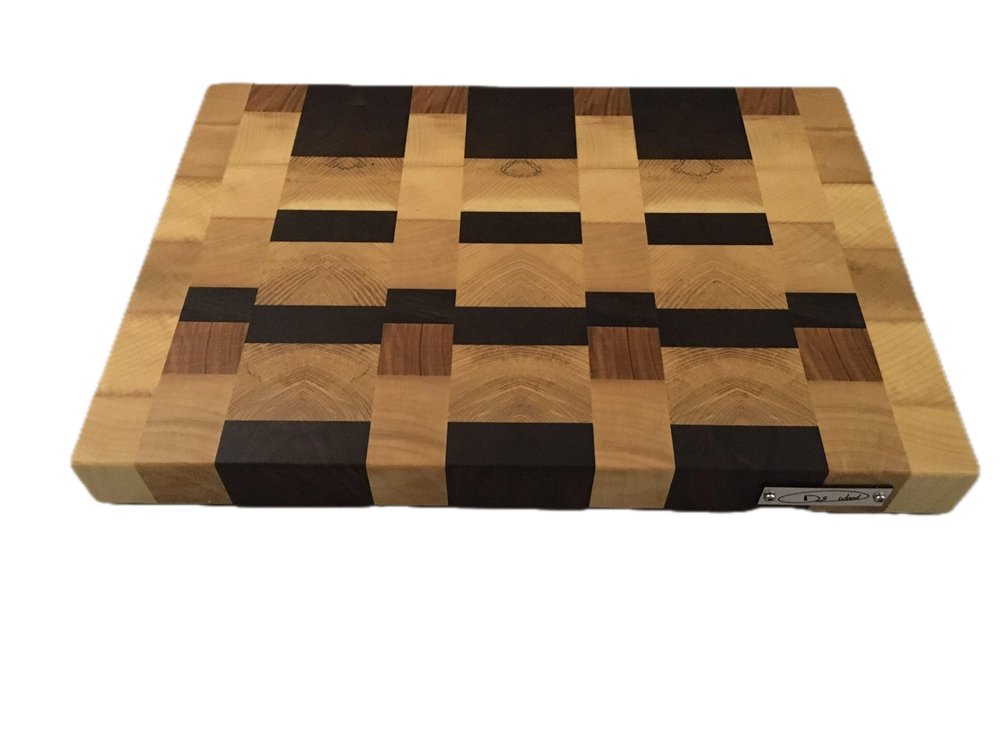
Plain Board 126-94 — End grain
Assembly of 5 local wood species with natural finishes. Size: 43.5 × 31.5 × 3.8 cm
One of a kind
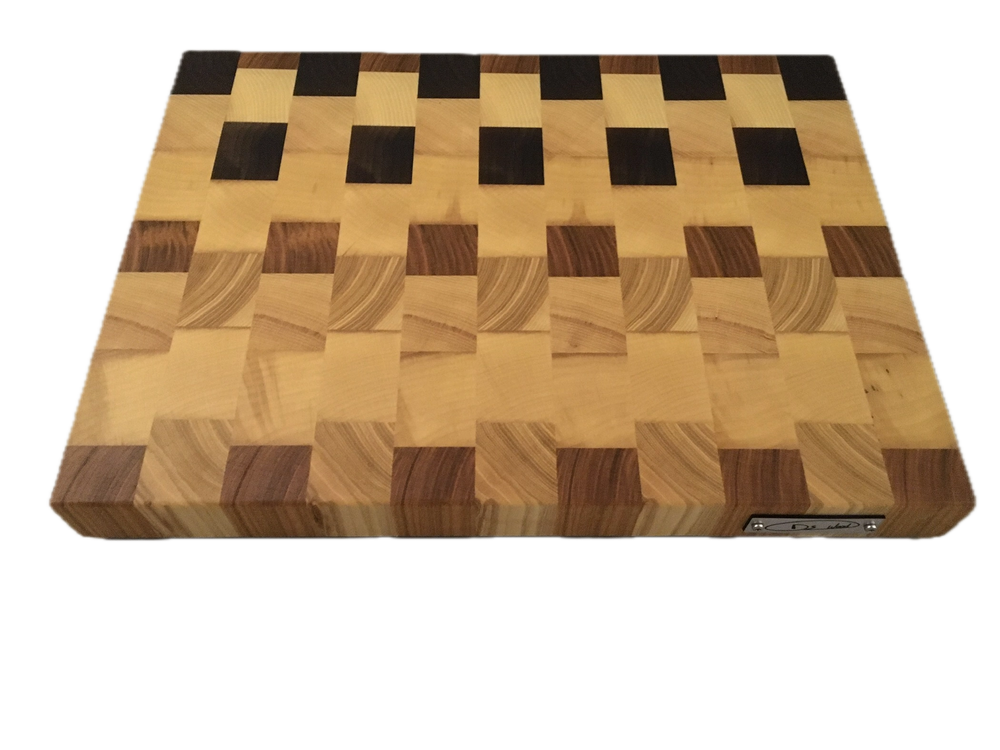
Plain Board 126-94 — End grain
Assembly of 5 local wood species with natural finishes. Size: 43.5 × 31.5 × 3.8 cm
One of a kind
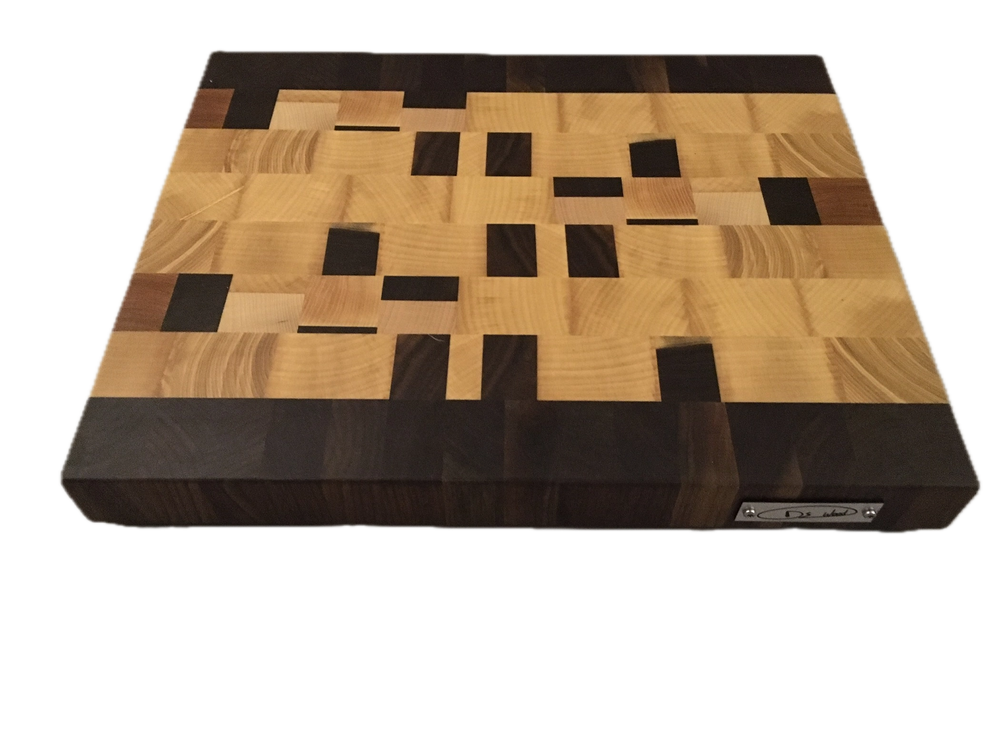
Plain Board 126-107 — End grain
Assembly of 5 local wood species with natural finishes. Size: 39 × 29.5 × 3.8 cm
One of a kind
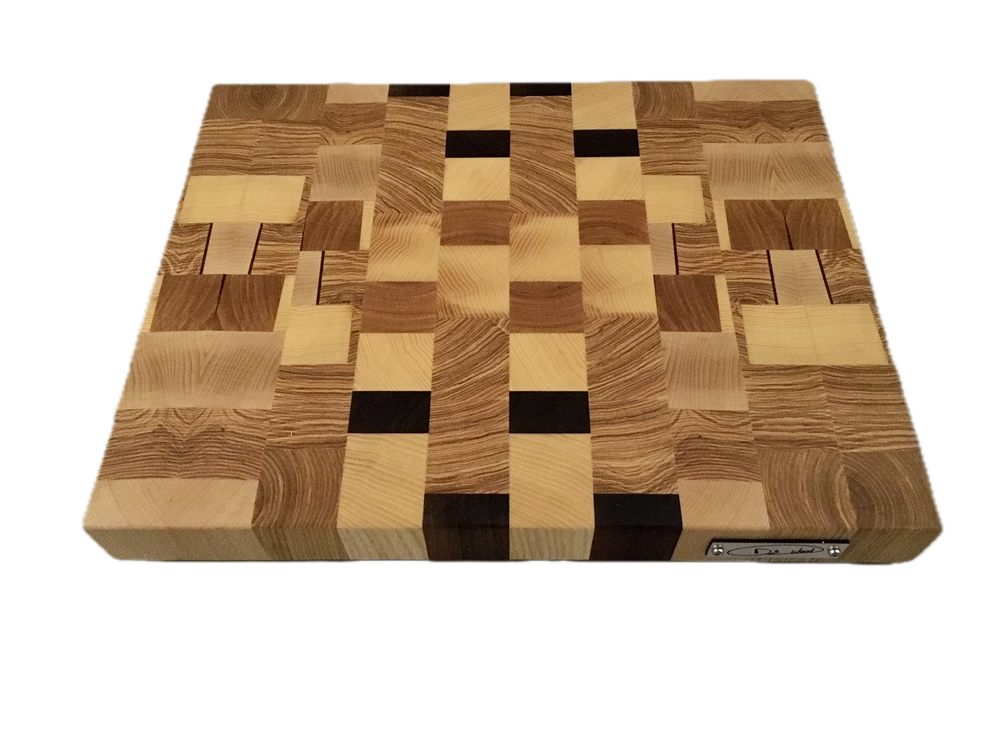
Plain Board 126-124 — End grain
Assembly of 5 local wood species with natural finishes. Size: 39 × 29.5 × 3.8 cm
One of a kind
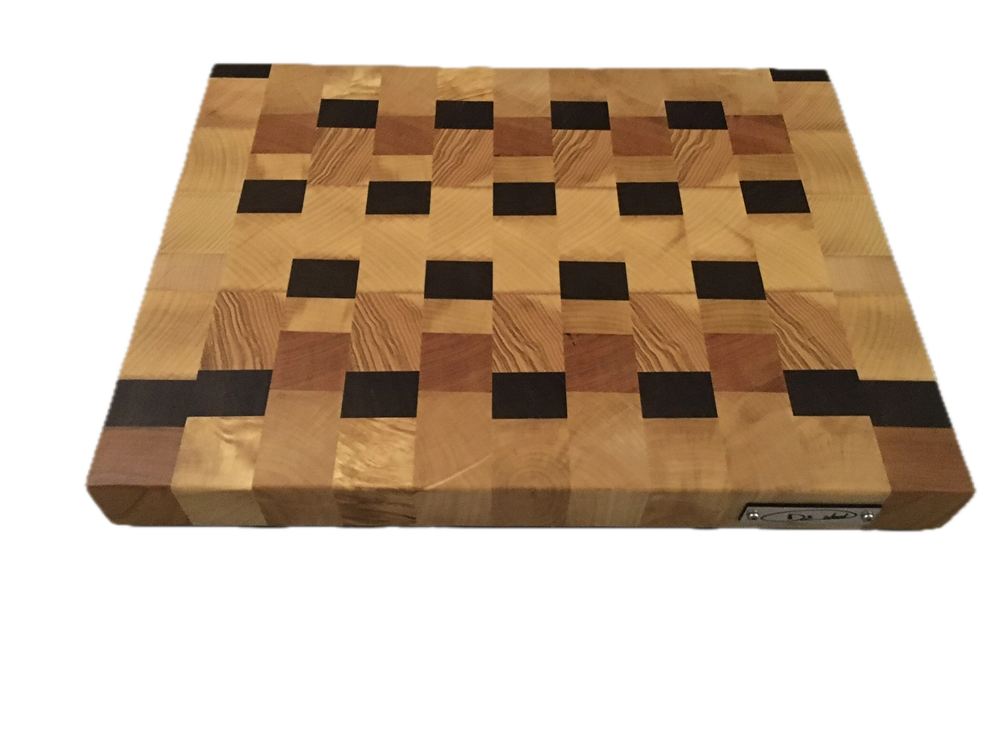
Plain Board 126-107 — End grain
Assembly of 5 local wood species with natural finishes. Size: 39 × 29.5 × 3.8 cm
One of a kind
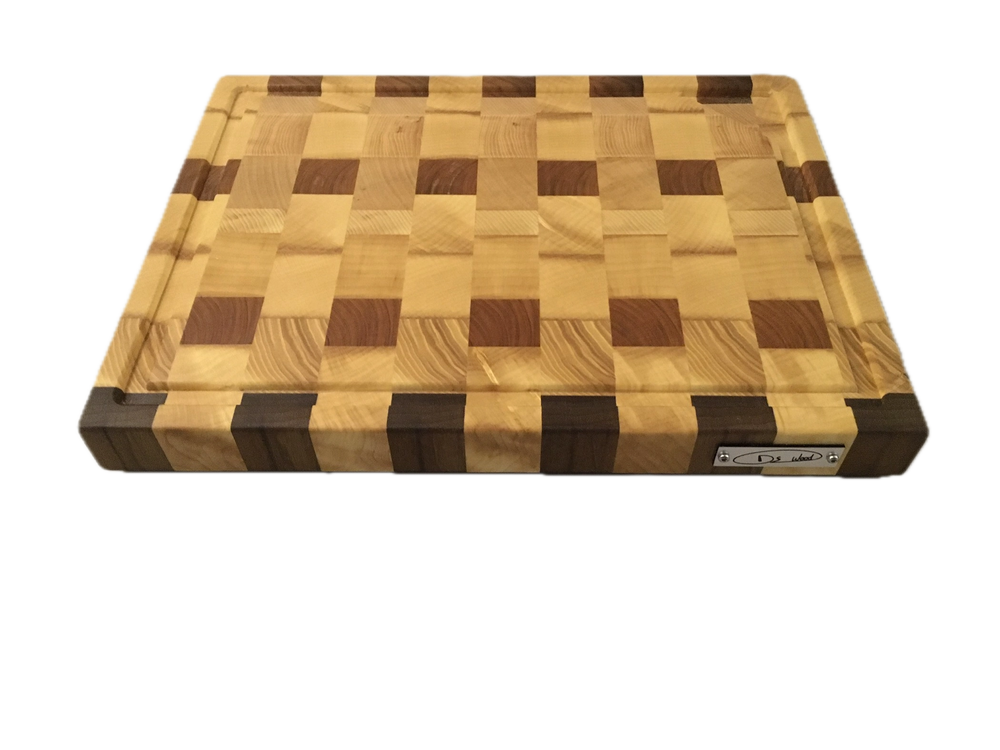
Juice Groove Board with Catch Tray 326-29 — End grain
Assembly of 4 local wood species with natural finishes. Size: 41.5 × 31 × 3.8 cm
One of a kind
Care
Caring for a wooden cutting board
-
Wash by hand
In lukewarm water, with a little natural soap. Never in the dishwasher, never soaked.
-
Dry upright
On its long side.
-
Oil once a month
With a food-grade plant oil or a balm made from plant oil and beeswax, never a mineral oil. On average, oiling once a month is enough, depending on use.
Each board can also be fitted with an engraved plaque: a first name, a date, a word. You enter the text on the board's product page when you order. Looking for a gift idea?
Frequently asked questions
What is the best wood for a cutting board?
What size should a cutting board be?
End grain or long grain?
Is a wooden board hygienic?
How do you care for a wooden cutting board?
Are your boards made in France?
Choose your wooden cutting board
Each board is unique: once it is gone, it is gone. The available pieces are online, with their wood species and dimensions.


